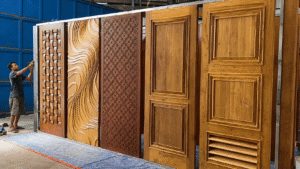

A solid door supplier may be a direct manufacturer, factory owner, distributor, reseller, or trading company. Although these businesses may offer similar products, they do not always have the same control over timber selection, manufacturing, customization, quality inspection, export documentation, or warranty claims.
For international buyers, identifying the actual business model is an essential part of supplier verification. A company may display factory photographs and describe itself as a manufacturer while outsourcing production to several unrelated workshops. Another supplier may operate its own factory but lack the documentation, project-management systems, or export experience required for an international order.
The right choice depends on the project. Buyers sourcing standard doors in small quantities may benefit from a distributor or stockist. Buyers requiring custom sizes, architectural designs, coordinated frames, controlled moisture content, and repeatable quality will usually need closer access to the manufacturer.
This guide explains how suppliers, manufacturers, factories, and trading companies differ—and how to choose the right production partner for an international solid wood door project.
Understanding the Different Types of Door Suppliers
The terms supplier, manufacturer, factory, distributor, and trading company are often used interchangeably. However, each term describes a different role within the supply chain.
Understanding these differences helps buyers determine who controls production and who will be responsible if an order does not meet the approved specification.
What Is a Door Supplier?
A door supplier is any company that sells or supplies doors to a buyer. It is a broad commercial term rather than proof of manufacturing capability.
A wood door supplier may:
- Manufacture doors at its own facility
- Purchase finished doors from another factory
- Coordinate custom orders with subcontractors
- Represent several manufacturers
- Stock standard products
- Consolidate products from different workshops
- Manage communication and export arrangements
Therefore, a company describing itself as a supplier may or may not be involved in physical production.
Before requesting a quotation, ask the company whether it owns or directly operates the facility that will produce the order.
What Is a Door Manufacturer?
A door manufacturer transforms raw timber or prepared components into finished or semi-finished doors.
Its responsibilities may include:
- Receiving and grading timber
- Drying and conditioning wood
- Cutting and machining components
- Creating profiles and joints
- Assembling door leaves
- Manufacturing frames and architraves
- Preparing hardware locations
- Sanding and finishing surfaces
- Conducting dimensional inspections
- Packing products for delivery
A manufacturer should be able to explain its production process, equipment, capacity, tolerances, and quality-control procedures.
What Is a Door Factory?
A factory is the physical location where manufacturing takes place. The factory may be owned by the seller, leased by the manufacturer, shared with another company, or operated by a subcontractor.
A company can legally sell products under its own brand without owning the production facility. This is why buyers should confirm the exact address where their order will be manufactured.
The factory address is also important when arranging an audit, third-party inspection, or container-loading supervision.
What Is a Trading Company?
A trading company connects buyers with one or more manufacturers. It may manage enquiries, pricing, documentation, communication, consolidation, and shipping.
Working with a trading company is not automatically a disadvantage. An experienced trading partner may simplify sourcing when a project requires several products from different factories.
However, buyers need transparency regarding:
- Which factory will produce the doors
- Which stages will be subcontracted
- Who approves materials
- Who controls moisture content
- Who conducts inspections
- Who is responsible for corrective work
- Whether the production source can change
The risks increase when a trading company presents itself as a direct factory but cannot provide meaningful access to the actual production facility.
What Is a Distributor or Stockist?
A distributor purchases products for resale and may hold inventory in a local warehouse.
This model can be suitable for buyers who need:
- Standard dimensions
- Small quantities
- Immediate availability
- Local delivery
- Established product models
- Simplified returns
A distributor may be less suitable when the project requires nonstandard dimensions, custom construction, project-specific finishing, matching frames, or precise hardware preparation.
Supplier vs Manufacturer
The main difference between a supplier and a manufacturer is the level of control over production.
A supplier focuses on providing the product commercially. A manufacturer is directly responsible for creating it. One company may perform both roles, but buyers should not assume this without verification.
Who Controls the Production Process?
A direct manufacturer can normally control more production variables internally, including:
- Wood species
- Timber grade
- Moisture target
- Component dimensions
- Construction method
- Joint design
- Panel profile
- Hardware preparation
- Finishing system
- Product labeling
- Quality inspection
- Export packaging
A supplier that outsources production may need to obtain approval from another factory before answering technical questions or implementing revisions.
The additional layer does not always create problems, but it can make communication and corrective action more complicated.
Who Is Responsible When Something Goes Wrong?
Responsibility should be defined before production begins.
Common problems may include:
- Incorrect dimensions
- Unapproved wood grades
- Excessive moisture content
- Color variation
- Misaligned hardware preparation
- Missing frames or components
- Packaging damage
- Production delays
- Inconsistent replacement products
The purchase agreement should identify the contractual seller, the manufacturer, and the party responsible for resolving defects.
A buyer should not discover after delivery that the supplier blames the factory while the factory claims it has no direct contract with the buyer.
Which Model Provides Better Technical Communication?
Direct communication with a manufacturer can reduce the number of parties involved in technical decisions.
This may improve the handling of:
- Drawing revisions
- Material approvals
- Finish samples
- Hardware schedules
- Production updates
- Inspection findings
- Corrective work
However, factory-direct purchasing is only effective when the manufacturer has staff capable of managing international enquiries, specifications, export documentation, and project communication.
| Evaluation Area | Direct Manufacturer | Trading Company or Reseller |
|---|---|---|
| Production control | Direct or internally managed | Dependent on another factory |
| Factory access | Usually available | May be limited |
| Customization | Generally more flexible | Subject to partner approval |
| Technical communication | More direct | Passes through an intermediary |
| Quality correction | Handled at production level | Requires additional coordination |
| Small-order flexibility | May depend on factory MOQ | May combine products or orders |
| Product selection | Usually specialized | May offer products from several factories |
| Pricing structure | Factory-based | May include an intermediary margin |
| Export support | Depends on internal experience | Often part of the trading service |
Benefits of Direct Factory Production
Buying directly from a factory can offer greater visibility and control. However, these benefits only apply when the factory has suitable equipment, documented procedures, experienced workers, and transparent communication.
Greater Control Over Timber and Construction
A direct wooden doors factory can manage material decisions before the components enter production.
These decisions may include:
- Timber species and grade
- Sapwood allowance
- Grain selection
- Moisture-content requirements
- Solid, laminated, or veneered construction
- Stile and rail dimensions
- Panel construction
- Adhesive selection
- Interior or exterior suitability
This direct control can be particularly valuable for solid teak doors, oversized entrance doors, hotel projects, villa developments, and orders requiring consistent appearance across many openings.
More Flexible Customization
Factories are generally better positioned to evaluate custom requirements because production personnel can review the design directly.
Custom options may include:
- Nonstandard widths and heights
- Custom thicknesses
- Single or double doors
- Pivot doors
- Sliding doors
- Carved doors
- Glass openings
- Custom panel profiles
- Matching frames
- Architraves and thresholds
- Hardware preparation
- Project-specific finishes
Customization should still be confirmed through approved shop drawings. A factory should not begin machining based only on a reference photograph or informal message.
Clearer Quality-Control Responsibility
Direct production allows inspection to take place throughout the manufacturing process.
Typical inspection stages include:
- Incoming timber inspection
- Moisture measurement
- Machining inspection
- Joint and profile inspection
- Assembly checks
- Sanding inspection
- Finishing approval
- Final dimensional inspection
- Packaging inspection
- Container-loading verification
Problems identified during production are usually easier to correct than defects discovered after finishing or delivery.
Better Production Visibility
A direct factory may provide clearer updates on:
- Material preparation
- Shop-drawing approval
- Sample development
- Machining progress
- Assembly status
- Finishing
- Final inspection
- Packaging
- Container loading
Buyers should agree on the format and frequency of updates before placing an order.
Potential Pricing Advantages
Buying directly may reduce intermediary costs, but factory-direct purchasing does not always produce the lowest quotation.
Pricing is also influenced by:
- Timber species and grade
- Door dimensions
- Construction method
- Design complexity
- Order quantity
- Finishing system
- Hardware preparation
- Packaging
- Documentation
- Inspection requirements
- Shipping terms
A lower price may reflect a different specification rather than better value.
Improved Repeat-Order Consistency
A factory that retains approved drawings, CNC files, door codes, finishing samples, and inspection criteria can reproduce products more consistently for future phases.
This is important for hotels, apartments, villas, housing developments, and commercial projects where additional or replacement doors may be required later.
MOQ, Pricing, and Lead Time
Minimum order quantity, pricing, and production time are closely connected. Buyers should evaluate them together rather than negotiating each point separately.
How Does MOQ Work?
MOQ may be based on:
- Number of door units
- Total order value
- Timber volume
- Production batch
- Number of designs
- Finishing color
- Packaging requirements
- Container utilization
A factory may accept a small trial order, but the unit cost can be higher because setup, drawings, samples, tooling, and documentation are divided across fewer products.
When comparing wooden door suppliers, ask whether the MOQ applies per design, per finish, per shipment, or to the total order.
Why Are Door Quotations Difficult to Compare?
Two quotations may appear to cover the same door while including different scopes.
One quotation may include only the door leaf. Another may also include:
- Door frames
- Architraves
- Thresholds
- Finishing
- Hardware preparation
- Protective wrapping
- Export pallets or crates
- Inspection
- Inland transport
- Export documentation
- Freight
Buyers should request a detailed quotation that lists inclusions, exclusions, material specifications, dimensions, finishing, packaging, and Incoterms.
What Affects Production Lead Time?
A realistic custom-production schedule may include:
- Technical review
- Shop-drawing preparation
- Drawing approval
- Timber procurement
- Kiln drying
- Material conditioning
- Sample production
- Sample approval
- Machining
- Assembly
- Finishing
- Coating cure time
- Final inspection
- Packaging
- Export preparation
Confirm when the lead time officially begins. It may start after the deposit, final drawing approval, sample approval, or confirmation of all technical details.
Factory Capacity vs Available Capacity
A factory may state a high monthly production capacity, but only part of that capacity may be available for a new order.
Ask:
- How many similar doors can be produced each month?
- What capacity is available during the required period?
- Are other large orders already scheduled?
- Can production be divided into phases?
- How will drawing revisions affect delivery?
- Is the quoted schedule supported by a production plan?
How to Verify a Wood Door Company
A professional website and attractive catalog do not prove that a company controls manufacturing.
Before selecting a wood door company, verify its legal identity, physical production facility, documentation, technical capabilities, and relevant experience.
Verify the Company Identity
Request documents showing the company’s registered name and business information.
Compare the details appearing on:
- Quotations
- Contracts
- Commercial invoices
- Bank accounts
- Certificates
- Packing lists
- Export documents
Unexpected differences should be investigated before payment.
A professional solid doors company should be able to explain which legal entity receives the order, which facility manufactures it, and which company appears as the exporter.
Request a Live Factory Tour
A live video tour can help confirm that the supplier has access to the production facility it claims to operate.
Ask to see:
- Factory exterior and signage
- Timber storage
- Drying facilities
- Machining areas
- CNC equipment
- Assembly stations
- Sanding areas
- Finishing areas
- Quality-control points
- Completed products
- Packaging areas
- Current production
A live tour is more reliable than a collection of edited photographs that may have been taken at different locations.
Confirm Which Factory Will Produce the Order
Buyers evaluating a wood doors factory should ask:
- Is the complete order manufactured at this facility?
- Are any stages subcontracted?
- Who performs kiln drying?
- Who controls final quality?
- Can an inspector visit during production?
- Will the production location remain the same for repeat orders?
Subcontracting is not necessarily a problem, but it should be disclosed and controlled.
Review Certifications and Legal Documentation
Ask the company to provide current documents relevant to its business, production activity, timber supply, and export shipment.
Check:
- Certificate holder
- Certificate number
- Validity period
- Covered facility
- Product scope
- Timber traceability
- Export-document requirements
Indonesia’s timber-legality system is designed to verify that timber products originate from legal sources and comply with applicable Indonesian requirements. However, documentation should still be reviewed for the specific supplier, product, shipment, and destination.
Avoid accepting broad claims such as “fully certified” without checking the current documents.
Evaluate the Project Portfolio
Relevant experience is more important than the total number of photographs.
Ask wood door companies to show projects similar to yours in terms of:
- Door type
- Dimensions
- Timber species
- Construction
- Finish
- Quantity
- Building type
- Destination country
- Packaging method
Production photographs, inspection records, shipment images, and installation photographs can provide stronger evidence than rendered catalog images.
Consider Independent Inspection
For large, complex, or first-time orders, an independent inspection may include:
- Factory audit
- Pre-production inspection
- During-production inspection
- Pre-shipment inspection
- Container-loading supervision
The inspection checklist should be based on the approved drawings, samples, purchase order, tolerances, and packaging requirements.
Quality Control and Product Warranty
Quality and warranty terms should be defined before production rather than negotiated after a problem occurs.
Define Quality in Measurable Terms
Quality requirements may include:
- Door width and height
- Thickness
- Squareness
- Straightness
- Moisture-content range
- Joint alignment
- Surface preparation
- Finishing color
- Sheen level
- Hardware positions
- Frame compatibility
- Packaging condition
Descriptions such as “premium quality” or “export quality” are not measurable acceptance criteria.
Approve Samples and Drawings
For custom orders, quality should be evaluated against controlled references such as:
- Final shop drawings
- Approved timber samples
- Signed finishing samples
- Corner samples
- Hardware templates
- Full-size prototypes
- Inspection checklists
Every drawing revision should be dated and numbered to prevent outdated information from reaching production.
Understand the Warranty Scope
A product warranty should explain:
- What defects are covered
- What conditions are excluded
- How long coverage lasts
- How quickly claims must be reported
- What evidence is required
- Whether an inspection is necessary
- Whether repair or replacement is offered
- Who pays replacement freight
- Which installation conditions must be followed
Do not assume that a warranty covers damage caused by storage, installation, building moisture, direct water exposure, hardware modification, or inadequate maintenance.
Separate Manufacturing Defects From Site Conditions
Solid wood products respond to their environment. Problems may occur when doors are stored in unfinished buildings, exposed to rain, installed before wet construction work is complete, or placed in conditions outside the agreed specification.
The supplier should provide storage, handling, installation, and maintenance guidance. The buyer should ensure that site teams follow it.
Export Documentation and International Shipping Support
A factory’s ability to manufacture a door does not automatically mean it can manage an international shipment.
Export orders require coordinated documentation, labeling, packaging, logistics, and communication with freight partners.
What Documents May Be Required?
Depending on the products and destination, documents may include:
- Commercial invoice
- Packing list
- Bill of lading
- Certificate of origin
- Timber-legality documentation
- Inspection report
- Insurance documents
- Packaging declaration
- Destination-specific paperwork
The importer or customs broker should confirm the requirements before shipment.
Clarify Incoterms
Common quotation terms may include:
- EXW
- FOB
- CFR
- CIF
The quotation should also state the named location or port.
Buyers should understand who is responsible for inland transport, export clearance, port charges, ocean freight, insurance, import clearance, duties, destination charges, and final delivery.
Confirm the Export-Packaging Method
Packaging should protect the door during factory handling, inland transport, container loading, ocean transit, unloading, and delivery to the project.
The packaging plan may include:
- Surface wrapping
- Edge and corner protection
- Separators
- Frame protection
- Pallets
- Crates
- Product labels
- Room or opening codes
- Moisture-control measures
- Container bracing
When wooden pallets, crates, or dunnage are used, the applicable destination requirements should be confirmed.
Establish an Export Claims Procedure
Before shipment, agree on:
- Arrival-inspection procedures
- Claim-notification deadlines
- Required photographs
- Required inspection reports
- Responsibility for transit damage
- Responsibility for manufacturing defects
- Repair or replacement options
- Freight responsibility
Clear procedures reduce disputes and accelerate corrective action.
Questions International Buyers Should Ask
Use this checklist when evaluating a solid door supplier:
- Are you a direct manufacturer, trading company, distributor, or reseller?
- Which factory will manufacture the order?
- Can you provide a live factory tour?
- Can an independent inspector visit the production facility?
- Which manufacturing stages are handled internally?
- What timber species and grades are available?
- How is the timber dried and stored?
- What moisture-content target will be used?
- Can you manufacture from architectural drawings?
- What custom sizes and designs can you produce?
- What is the minimum order quantity?
- What is included in the quoted price?
- When does the production lead time begin?
- What dimensional tolerances can you guarantee?
- Can you provide samples before mass production?
- Which quality-control records will be supplied?
- Which legal and export documents can you provide?
- How will the products be labeled and packed?
- Which Incoterms can you offer?
- What warranty and claims procedures apply?
Clear, detailed answers indicate that the supplier understands both manufacturing and international procurement.
When Custom Manufacturing Is the Better Choice
Standard products are suitable for some orders, but custom manufacturing becomes more valuable as project complexity increases.
Choose Standard Products When
Standard products may be sufficient when:
- The openings use common dimensions
- Products are needed quickly
- Quantities are small
- Existing designs are acceptable
- Finishing requirements are flexible
- Matching architectural components are not required
Choose Custom Manufacturing When
Custom production is generally more appropriate when:
- Door dimensions are nonstandard
- Frames must match specific wall conditions
- The design follows architectural drawings
- Oversized or pivot doors are required
- Hardware positions must be prepared precisely
- Finishing must match other interior elements
- Doors need coordinated identification codes
- Multiple project phases require repeatability
- Replacement products may be required later
What Information Should Buyers Provide?
A detailed enquiry should include:
- Door schedule
- Architectural drawings
- Quantities
- Opening dimensions
- Door thickness
- Wall thickness
- Frame details
- Timber specification
- Construction requirements
- Finishing references
- Hardware schedule
- Interior or exterior use
- Destination country
- Required delivery date
- Packaging expectations
Complete information allows the factory to calculate material, production time, finishing, packaging, and shipping more accurately.
Source Custom Teak Doors From Indonesia
Indonesia is an established sourcing destination for buyers seeking custom solid teak doors, frames, windows, and architectural wood products.
The most suitable supplier is not simply the company offering the lowest price. International buyers need a production partner that can understand drawings, prepare timber correctly, manufacture custom designs, inspect the products, provide relevant documentation, and prepare the order for export.
Work Directly With Safira Jati’s Factory
Safira Jati is an Indonesian direct factory manufacturer specializing in custom teak doors, frames, windows, and related architectural wood products.
Its factory-based production model allows buyers to discuss project requirements directly with the company responsible for manufacturing.
Safira Jati’s stated capabilities include:
- Direct factory production
- Custom-made designs
- Solid kiln-dried teak doors
- Matching teak frames
- Custom teak windows
- Properly dried timber
- Factory machining and CNC capabilities
- Quality-focused production
- International delivery support
- Licensed and certified company positioning
For procurement verification, buyers can request current legal, certification, timber, and shipment documents relevant to the proposed order.
Custom Solid Teak Door Production
Safira Jati produces teak doors for residential, hospitality, commercial, institutional, and architectural projects.
Custom requirements may include:
- Project-specific dimensions
- Single and double doors
- Classic, minimalist, or carved designs
- Matching teak frames
- Glass openings
- Hardware preparation
- Interior and exterior applications
- Custom finishing references
Buyers should submit drawings, quantities, sizes, hardware information, finishing requirements, destination, and delivery expectations for technical review.
Kiln-Dried and Certified Indonesian Teak
Safira Jati states that its doors are manufactured from solid kiln-dried Indonesian teak sourced from sustainably managed and government-regulated sources.
For international projects, the buyer and factory should still agree on the moisture-content target, measurement method, tolerance, sampling procedure, and installation environment.
Current certification and timber-legality documents should be reviewed during supplier qualification and again when preparing shipment documentation.
Experience With International Deliveries
Safira Jati lists international shipment experience across Europe, North America, Asia, and Australia.
Its listed shipment destinations include the Netherlands, the United Kingdom, Japan, the United States, Australia, Switzerland, India, France, Germany, Austria, Latvia, and the Maldives.
Experience across different markets can be valuable because export orders require coordinated packaging, labeling, documentation, freight arrangements, and communication with international buyers.
The documentation and shipping method for each order should still be confirmed according to the product, destination, and agreed Incoterm.
A Direct Factory Option for Project Buyers
Safira Jati may be considered by:
- Importers
- Contractors
- Architects
- Developers
- Door distributors
- Hotel and resort suppliers
- Residential project owners
- Commercial project teams
A well-prepared enquiry helps the factory provide a more accurate quotation and production assessment.
Include the complete door schedule, drawings, quantities, timber requirements, finishes, hardware details, destination, delivery target, and requested shipping terms.
Discover Safira Jati’s direct factory teak door solutions for your international project.
Frequently Asked Questions
What Is a Solid Door Supplier?
A solid door supplier is a company that sells or supplies solid doors. It may be a direct manufacturer, trading company, distributor, or reseller. Buyers should verify who physically manufactures the doors and who controls materials, quality, documentation, packaging, and warranty claims.
Is a Supplier the Same as a Manufacturer?
Not always. A supplier provides products commercially, while a manufacturer physically produces them. One company may perform both roles, but some suppliers purchase doors from independent factories or subcontractors.
Is Buying Directly From a Door Factory Cheaper?
It can reduce intermediary costs, but it does not always produce the lowest total price. Timber grade, construction, customization, quantity, finishing, frames, packaging, inspection, documentation, and shipping terms all influence the final cost.
How Can I Verify That a Door Company Operates a Factory?
Request a live factory tour, verify the production address, review company documents, examine current production, and arrange an independent inspection. Ask which manufacturing stages are performed internally and whether any work is subcontracted.
What Is the Typical MOQ for Custom Wooden Doors?
MOQ varies according to the factory, design, timber volume, finishing, order value, and production batch. Some factories accept trial orders at a higher unit price, while others require a minimum number of doors or a minimum total value.
Can a Factory Manufacture Doors From Architectural Drawings?
Yes, a capable custom manufacturer can review architectural drawings and prepare production shop drawings. Manufacturing should begin only after dimensions, construction, frames, hardware positions, finishes, tolerances, and product codes are approved.
What Quality-Control Documents Should Buyers Request?
Buyers may request moisture records, dimensional inspection reports, approved-sample records, production photographs, finishing checks, final inspection reports, packing lists, packaging photographs, and container-loading documentation.
What Warranty Should a Wooden Door Supplier Provide?
The warranty should define covered defects, exclusions, duration, notification deadlines, required evidence, inspection procedures, repair or replacement options, and freight responsibility. Site conditions, storage, installation, and maintenance requirements should also be documented.
Can a Door Supplier Arrange International Shipping?
Some suppliers can coordinate export packaging, documentation, freight forwarding, and international delivery. Buyers should confirm the Incoterm, named port or location, insurance, destination charges, customs responsibility, and required import documents.
When Is Custom Manufacturing the Better Choice?
Custom manufacturing is preferable when a project requires nonstandard dimensions, matching frames, architectural designs, special hardware preparation, oversized doors, custom finishing, product coding, or repeatable production across several project phases.